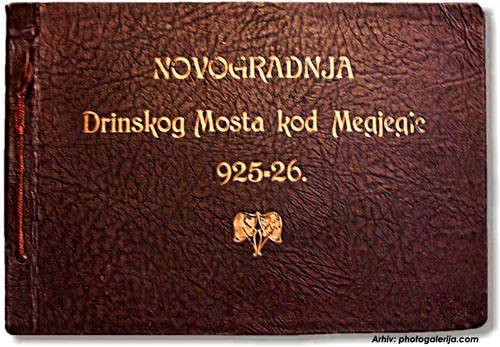
We utilize an exceptional opportunity to view a valuable historical photographic resource regarding the restoration of the railway bridge near Međeđa, more commonly known as the “Railway Bridge at the Mouth of the Lim into the Drina – Bridge on the Drina,” from the narrow gauge railway line Sarajevo – Visegrad, or Sarajevo – Priboj on the Lim.
We take this opportunity to share a valuable historical photographic record regarding the renovation of the railway bridge near Međeđe, commonly known as “Railway Bridge at the Mouth of the Lima River into the Drina – Bridge on the Drina,” along the narrow gauge line Sarajevo – Višegrad, or Sarajevo – Priboj on the Lim River. On February 2, 1925, a section of the narrow gauge railway from Vardište to Užice was put into operation, leading to the establishment of railway traffic along the entire route from Sarajevo to Belgrade during 1926. To ensure that the bridge effectively performed its demanding function on the aforementioned corridor route, of economic importance to Bosnia and Herzegovina and Serbia, the reconstruction and new construction of this bridge began in March 1925. It was reinforced with a new metal structure resting on two concrete supports. The renewal and modernization program for the reconstruction of this most significant structure on the route aimed to meet a higher load capacity than the old designed model, as historical records show that this bridge was destroyed during World War I in 1914 and rebuilt in 1916. Finally, we present only a selection of photographs for our story, your story, and our collective memory of this lattice bridge, reflecting the planning, organization, execution of works, and realization from March 1925 to June 1926. Additionally, through the photographs, you can observe the chronological sequence of activities, from installing provisional structures and steel scaffolds, mounting foundational bases, installing supporting frameworks, steel supports, and guides, to mounting supports with a crane, inter-floor structures, crane tracks, etc. Undoubtedly, this metal bridge was the greatest achievement of construction at that time on the Sarajevo – Belgrade narrow gauge line. The bridge, distinguished by its appearance, was harmoniously integrated into the surrounding environment and was proclaimed a valuable architectural and artistic work. You can read about the history, from the initial construction of the first bridge, its destruction during the war, and subsequent reconstructions, in a previously published article available at the link: https://vremeplov.ba/2025/?p=11090
[END SECTION TO TRANSLATE]
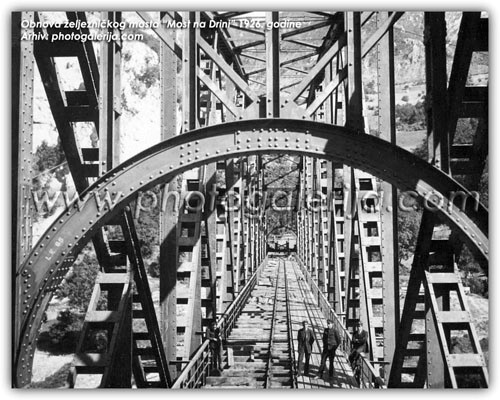
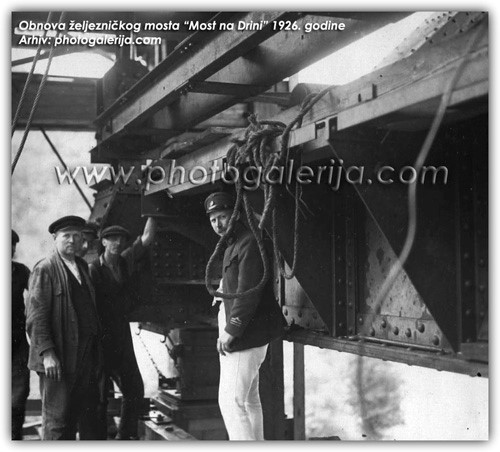
On February 2, 1925, a section of the narrow gauge from Vardište to Užice was put into operation, so that during 1926, railway traffic was established along the entire route from Sarajevo to Belgrade. To ensure that the bridge effectively performed its demanding function on the aforementioned corridor railway line, which is of economic importance to Bosnia and Herzegovina and Serbia, the reconstruction—new construction of this bridge began in March 1925. It was reinforced with a new metal structure resting on two concrete supports. The purpose of the renovation and modernization program in reconstructing this most significant structure on that line is to satisfy a higher load capacity category than the old designed load model, because from history we know that this bridge was destroyed during World War I in 1914 and rebuilt in 1916. Finally, we present only a part of the photographs for the purpose of our story and your memory of this lattice bridge, with reflections on planning, organizing, executing the work, and its realization from March 1925 to June 1926. Additionally, through these photographs, you can see a chronological sequence of activities—from the installation of provisional structures and steel formwork, the placement of prefabricated foundations, foundation scaffolding, installation of superstructure, steel supports and guides, crane-mounted assembly of supports, inter-floor constructions, and crane tracks, among others.
We take this opportunity to present a valuable historical photographic resource regarding the reconstruction of the railway bridge at Međeđa, more commonly known as “The Railway Bridge at the Confluence of the Lima River into the Drina – The Bridge on the Drina,” on the Sarajevo – Višegrad, and Sarajevo – Priboj railway line. On February 2, 1925, part of the narrow-gauge railway from Vardište to Užice was put into operation, allowing railway traffic to run along the entire route from Sarajevo to Belgrade by 1926. To ensure the bridge effectively performed its demanding function on this major corridor route, of economic importance to Bosnia and Herzegovina and Serbia, the reconstruction and new construction of this bridge began in March 1925. It was reinforced with a new metal structure resting on two concrete piers. The project’s goal during the reconstruction and modernization was to meet higher load capacity standards than those of the original design, as we know from history that this bridge was destroyed during World War I in 1914 and rebuilt in 1916. Finally, we present only a selection of photographs to tell our story and share memories of this lattice bridge, reflecting on planning, organizing, executing the work, and completing the project from March 1925 to June 1926. Through these images, you can observe the chronological sequence of activities, including the installation of provisional and steel formwork, the assembly of foundations and scaffolding, the placement of superstructures, steel beams and guides, crane installation, intermediate floor structure, crane tracks, and more. Undoubtedly, this metal bridge was the greatest achievement of construction engineering on the Sarajevo – Belgrade narrow-gauge line at that time. The bridge, distinguished by its appearance, was harmoniously integrated into the surrounding environment and was considered a valuable architectural and artistic work. You can read about the history from the construction of the first bridge, through its destruction during the war, and subsequent rebuilding in a previously published article at this link: https://vremeplov.ba/2025/?p=11090
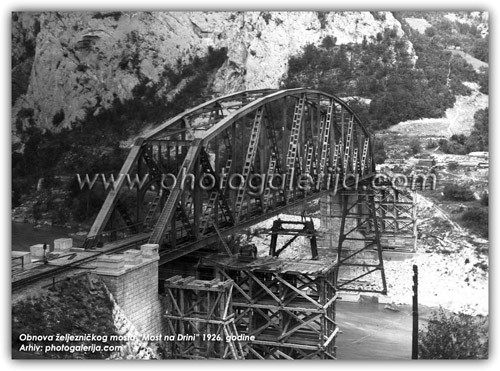
Without a doubt, this metal bridge was the greatest achievement of engineering at the narrow-gauge railway Sarajevo – Belgrade at that time. The bridge, distinguished by its appearance, blends harmoniously into its surroundings and was considered a valuable architectural and artistic work.
February 2, 1925, marked the opening of a section of the narrow-gauge railway from Vardište to Užice, leading to the establishment of train services along the entire route from Sarajevo to Belgrade throughout 1926. To ensure the bridge could effectively perform its demanding role on this vital corridor line of economic importance for Bosnia and Herzegovina and Serbia, a reconstruction and new construction project began in March 1925. This involved strengthening the bridge with a new metal structure resting on two concrete supports. The goal of the reconstruction and modernization program was to meet a higher load capacity category than the original design, considering that, historically, this bridge was destroyed during World War I in 1914 and rebuilt in 1916.
Finally, we present only a selection of photographs to tell our story and preserve the memory of this lattice bridge, reflecting on the planning, organization, execution of works, and realization from March 1925 to June 1926. Through these images, you can also see the chronological sequence of activities, from the installation of temporary supports and steel scaffolding, placement of modular foundations, foundation scaffolding, erection of superstructures, steel supports, and guides, to the use of cranes for mounting supports, intermediate structure construction, crane tracks, and other work stages.
Undoubtedly, this metal bridge was the greatest achievement of the infrastructure construction at that time on the Sarajevo – Belgrade narrow route. Its striking appearance was very harmoniously integrated into the surrounding environment, earning it recognition as a valuable architectural and artistic work.
You can read about the history of the first bridge, its destructions during the war, and subsequent reconstructions in a previously published article at the link: https://vremeplov.ba/2025/?p=11090
We take the opportunity to present a valuable historical photographic record regarding the reconstruction of the railway bridge near Međeđa, more commonly known as the “Railway Bridge at the Mouth of the Lima into the Drina – Bridge on the Drina,” on the narrow gauge railway line Sarajevo – Višegrad, or Sarajevo – Priboj on the Lim. On February 2, 1925, a section of the narrow gauge railway from Vardište to Užice was put into operation, so that during 1926, railway traffic was established along the entire route from Sarajevo to Belgrade. To ensure the bridge effectively performs its demanding function on this strategic corridor, of economic importance to both Bosnia and Herzegovina and Serbia, in March 1925, the reconstruction and new construction of this bridge began, reinforced with a new metal structure resting on two concrete supports. The goal of the reconstruction and modernization program of this critical structure was to meet a higher load capacity category than the old designed load model because we know from history that this bridge was destroyed during World War I in 1914 and rebuilt in 1916. Finally, we present only part of the photographs for our story, your story, and the memory of this lattice bridge, reflecting on the planning, organization, execution of works, and realization from March 1925 to June 1926. Additionally, through these images, you can observe the chronological sequence of activities, from installing provisional structures and steel brace supports, installing mountable foundations, foundation scaffolding, erecting the superstructure, steel supports and guides, crane assembly, inter-floor structure, and crane tracks, among others. Undoubtedly, this metal bridge was the greatest achievement of the engineering of that time on the Sarajevo – Belgrade narrow gauge line. The bridge, distinguished by its appearance, was very harmoniously integrated into the environment and was declared a valuable architectural and artistic work. You can read more about the history from the construction of the first bridge, its destruction during the war, and subsequent reconstructions in an already published article available at: https://vremeplov.ba/2025/?p=11090
You can read about the history from the construction of the first bridge, its destructions during the war, and its subsequent reconstructions in a previously published article at this link: https://vremeplov.ba/2025/?p=11090
We take this opportunity to showcase a valuable historical photographic source regarding the reconstruction of the railway bridge near Međeđa, commonly known as “Railway Bridge at the Mouth of the Lim River into the Drina – Most na Drini,” on the narrow-gauge railway line Sarajevo – Višegrad, or Sarajevo – Priboj on the Lim. On February 2, 1925, a section of the narrow-gauge railway from Vardište to Užice was put into service, leading to the establishment of railway traffic along the entire route from Sarajevo to Belgrade during 1926. To ensure the bridge could effectively perform its demanding function on this important corridor line from the economic perspective of Bosnia and Herzegovina and Serbia, construction and reconstruction of the bridge began in March 1925. It was reinforced with a new metal structure resting on two concrete supports. The purpose of this reconstruction and modernization program, aiming to meet a higher load capacity than the old design, was to ensure the bridge could handle increased stresses, since history shows it was destroyed during World War I in 1914 and reconstructed in 1916. Finally, we are presenting only a part of the photographs for the purpose of our story, your story, and remembrance of this lattice bridge, reflecting on planning, organizing, executing, and completing the work from March 1925 to June 1926. Additionally, through these images, you can observe the chronological sequence of activities, from the installation of provisional structures and steel scaffoldings, assembly of foundations, foundation scaffolding, superstructure installation, steel supports and guides, crane mounting, inter-floor structure, crane tracks, and more. Undoubtedly, this metal bridge was the greatest achievement of construction at that time on the Sarajevo – Belgrade narrow-gauge line. It stands out with its appearance and is harmoniously integrated into the environment, declared a valuable architectural and artistic work. You can read about the history from the time of the first bridge, its destruction during the war, and subsequent renovations in a previously published article at the following link: https://vremeplov.ba/2025/?p=11090


