
We are publishing the document titled “Proposal of measures for resolving traffic on the narrow-gauge tracks south of Čapljina,” prepared by the Institute for Research and Engineering of the Railway Transport Company Sarajevo, for the year 1974.
**Substitution as an Imperative**
From this elaboration, you can read that after considering and issuing certain conclusions that would indicate possible ways to further address the problem of narrow-gauge railways south of Čapljina, ŽTP Sarajevo proposes substituting railway traffic on narrow gauges with road traffic.
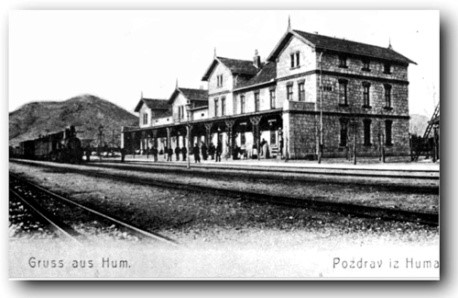
Currently, the condition of the road networks in the areas of the Chepelina – Dubrovnik, Hum – Bileća, and Bileća – Nikšić lines allows access to the following places: Gabela, Hrasno, Hutovo, Hum, Uskoplje, Dubrovnik, Ljubova-Duži, Trebinje, Lastva, Bileća, Nikšić, as well as to Ravno, Zavala, Petrovići, Vilusi, with traffic on shorter routes being conducted via gravel or poor local roads.
The same document states (from 1968, when the narrow gauge Uskoplje – Zelenika was discontinued) that although measures of rationalization for cost reduction have been implemented, due to the aging infrastructure and capacity inefficiencies — including both the tracks and the rolling stock, locomotives, and transshipment capacities — along with high transportation costs, these railways, overall, cause (and will continue to cause) ongoing business losses.
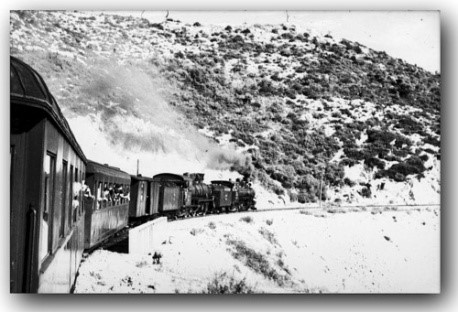
Since substitution is presented as an imperative, the expert team, through this elaboration, proposes possible options (which clearly demonstrate its justification) regarding the costs of railway freight transport in relation to road transport costs and ways to resolve the technological surplus of workers, as a total of 1,744 workers were employed on these lines, and a solution is needed for 944 workers.
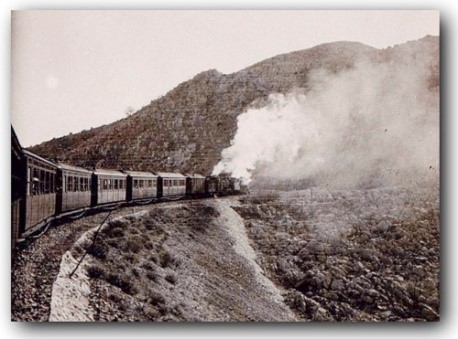
Investing in modernization (discussed at two meetings in July 1974, where the Mostar Chamber of Commerce, along with representatives of socio-political communities and workers’ organizations, considered the economic justification of normalizing narrow-gauge railways) and equipping the railway line with a length of 170 km is out of the question, as the scope of work on the railway would not justify any significant investments.
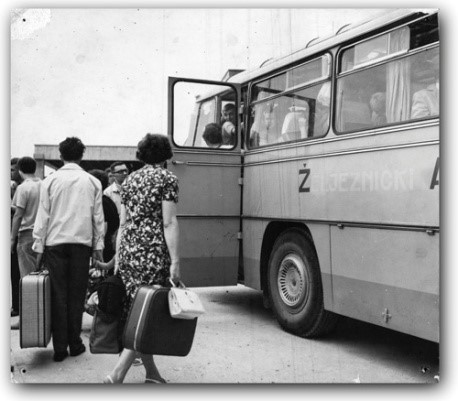
Activities in implementing substitution with assumption of financial obligations
Considering the overall difficult position of the company and the limited capabilities of ŽTP Sarajevo regarding assumption of financial obligations during the phase of discontinuing the railway and conducting substitution, the following activities are proposed:
- Preparation and obtaining of the necessary approvals for the suspension of railway traffic (planned from June 1, 1975),
- Final organization of road transport,
- A detailed employment plan for the workforce (technological redundancy), required qualifications (retraining), early retirement of workers, etc.,
- Determining the financing structure and securing the necessary investment funds for the implementation of the substitution program.
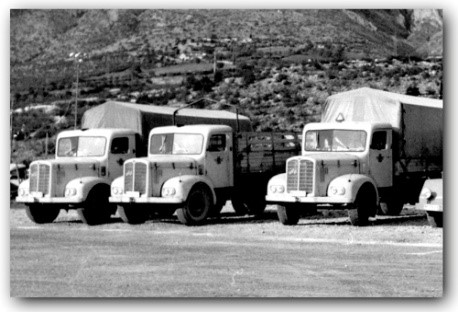
An interesting detail regarding the employment of the workforce states that all pulling trains (trucks with trailers) must be operated by two qualified drivers. Preference is given to former workers from the narrow-gauge railway line who have the possibility of obtaining the necessary driving license category. The same elaboration also discusses the choice of the type of road vehicle, and the selected model is the domestic FAP 1314 FF, 145 HP, along with the “Itas” trailer vehicle.
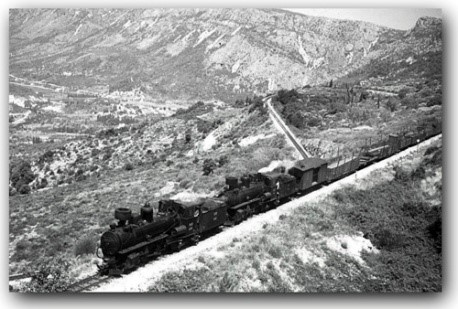
Ultimately, these proposals stem from the consideration of the general social interests of the Republic of Bosnia and Herzegovina. For this reason, ŽTP Sarajevo, through this elaboration, suggests to the appropriate authorities of the Republic a rational approach to resolving the issue of narrow-gauge tracks south of Čapljina.

Click on the PDF document to view the elaboration: