Written by: **Srećko Ignjatović**
In this brief study, we present a summarized overview of the planning and execution of works on the construction of the underground-railway communication Bil Stara – Vrbica Mine, as well as the forest railway Bila Nova – Trenica, or the forest railway “Jasenica,” whose route extends from Bila to the forested areas of the Jasenica River basin.
With this publication, we make an attempt to rescue from oblivion all those most significant events that arose during the period of renewal and reconstruction of the country in the Travnik district.
For available information and factual evidence, we utilized historical materials through recorded chronicles of the newspapers and journals of the time, then photographs, maps, and technical sketches, as well as oral testimonies of living participants who survived the post-war historical period in the Travnik district.
Immediately after the end of World War II, numerous activities were initiated to address the consequences of war damages. It was necessary to uplift the country from economic backwardness and pave the way for a modern economy.
After the liberation, efforts were also directed toward developing certain branches of the economy for which abundant raw material resources exist. In the first year after liberation, in the Travnik district, a great enthusiasm was recorded, which was expressed through the renewal and construction of the land. The primary political force in the nation’s rebuilding (FNRJ; 1945-1963) was led by the People’s Front of Yugoslavia in the broadest sense, as a specific political organization formed on the principle of voluntariness.
Construction of the Bila – Vrbica Mine Railway, 1947
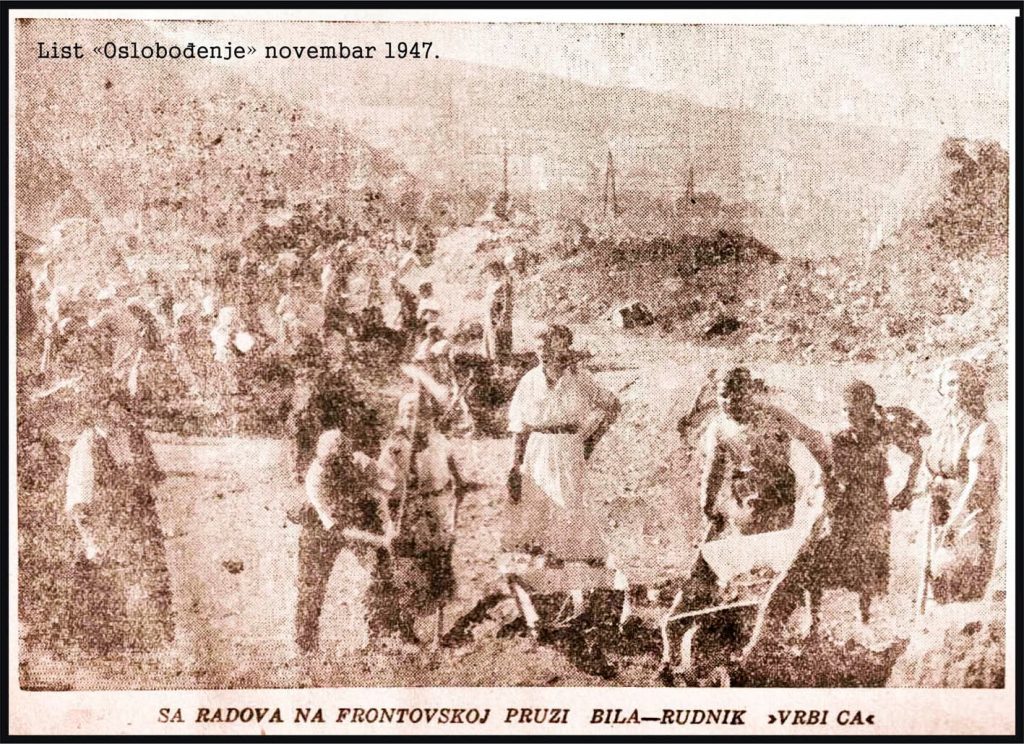
The construction of the narrow-gauge industrial railway Bila – Rude „Vrbica“ (about 6.7 km in length) began in September 1947 by members of the People’s Front of the Travnik District. Recognizing the importance of building this railway, members of the People’s Front of the Travnik district concluded at their large conference that, through planning and still within that same year, they would voluntarily construct the mentioned railway. At that time, the city of Travnik formed two front-line brigades that worked on the railway for ten days each, and one youth labor brigade that worked for 30 days. Additionally, front-line brigades were formed in local areas, each working in shifts for five days. Once a week, union-organized workers from Travnik and its surroundings participated in the construction of the railway. The volunteers donated their labor days, with local committees of the People’s Front from Han Bile and Mehurići providing the voluntary work days.
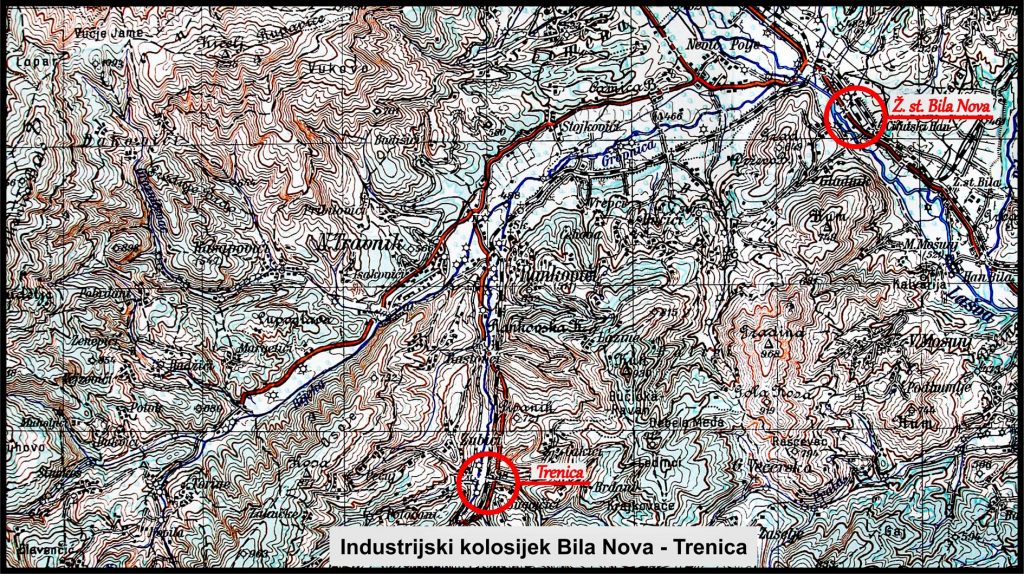
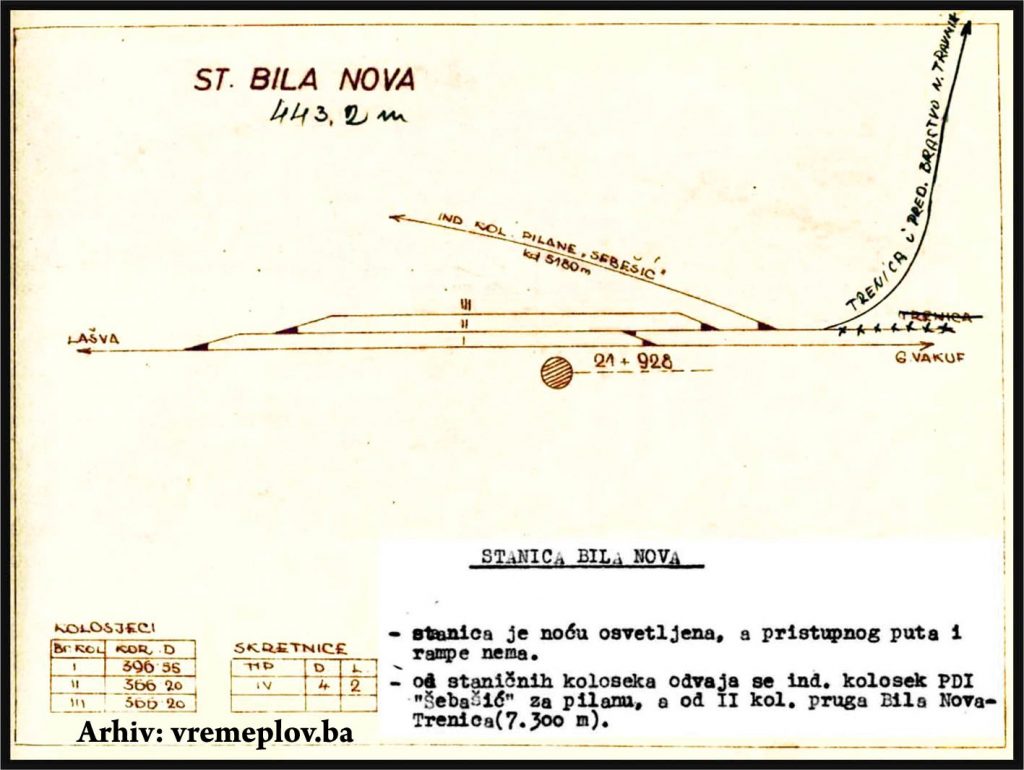
At the large conference held, members of the People’s Front of the Travnik district, in addition to work on the mentioned industrial siding, reached the conclusion that with voluntary labor they would build a new railway station “Bila Nova” (at profile kilometer 21+928, Lašva – Travnik) with a capacity of two station tracks and a separate track for the needs of the “Bila Nova – Trenica” forest railway. All work on the construction of the railway infrastructure (tracks and station building) and the forest railway was completed on November 11, 1947, and handed over for public use.
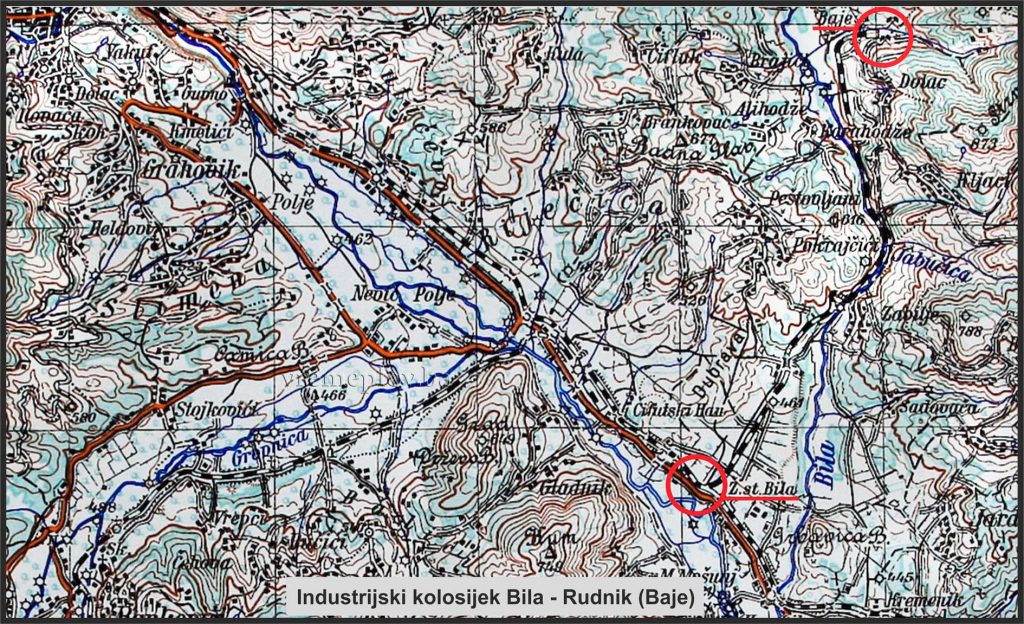
The construction of the Bila – Vrbica Mine industrial railway begins at the Bila (Stara Bila) railway station, which is located on the narrow-gauge Lašva – Travnik line (at profile kilometer 20+243), put into service on August 26, 1893. From the station, as a branch line, it continues along the river Bile through often inaccessible terrain of Vlašić mountain plateau, passing through the village of Zabilje, then alongside the villages of Pokrajčići, Peštovljani, Karahodže, Alihodža, Kljaci, Dolac, Brajići, and other smaller hamlets, which, due to their remoteness, had no road access. In some places, the route climbs with gradients of up to 25‰ and ultimately ends in the Vrbica hamlet of the Baja village. On the site of Baja village, there are unused, rich deposits of very high-quality lignite, which farmers have mined manually since ancient times for household needs and transported to the city on horseback for trade purposes.
Members of the People’s Front, while constructing the Bila – Vrbica Mine industrial railway, encountered significant difficulties working in rain and snow. In fulfilling the obligations they had undertaken, the organizations of the Han Bile and Mehurići local committees competed with each other – not only did the local committees compete, but individuals did as well. For example, during the construction of the mine railway, Ragib Husejnagić (60 years old) volunteered 10 workdays, Halid Junuzović volunteered 17, and Čajo Šemsa volunteered 20 workdays. Marko Kozlina and his family contributed 50 days, while Hamza Arnautović (65 years old), together with his family, donated 75 personal and 7 freight volunteer workdays.
Among the front-line soldiers of the Jankovačka brigade was 75-year-old elder Stipo Marić, a volunteer, an invalid from World War I, who had no fingers on his hands. Mujo Sefer, a member of the construction site management, saw the elderly man holding a shovel firmly with his “batrljci” (clenched fists), and asked him to stop working since he was too old for that. The old man Stipo replied that there’s no need to pity him because, as he said, this ‘our’ folk railway must be built within a certain deadline.
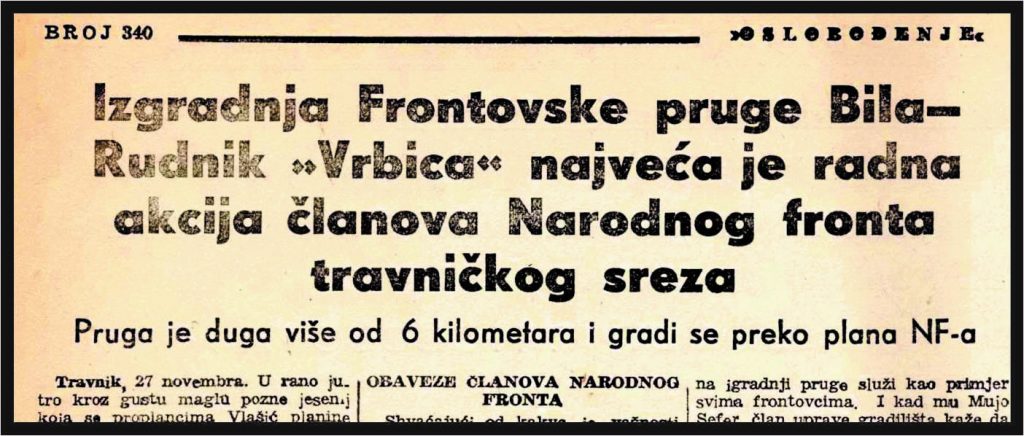
Approximately 53,000 volunteer workdays were contributed to the construction of this railway line. About 36,000 cubic meters of earth and stone were excavated (moved or filled into embankments). A dry stone retaining wall of 49 cubic meters was built, along with around 2,000 meters of drainage ditches excavated and 20 concrete pipe culverts totaling about 150 meters in length cast. Similarly, two coastal and one river pier for a 30-meter-long bridge were also cast, with a metal structure provided for the bridge. After earthworks, sleepers were laid and materials prepared for the installation of the track, which extended 3,600 meters. (Source: Newspaper “Oslobođenje,” issue 340, November 1947.)
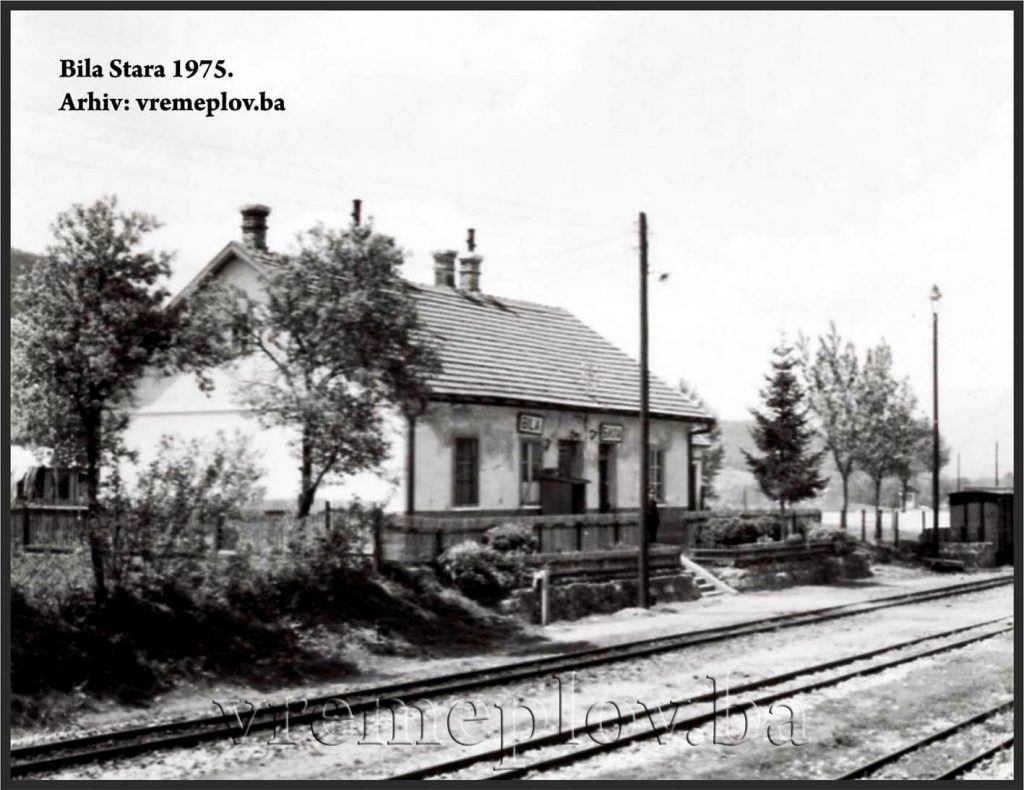
The Bila Stara railway station, next to the passageway, had two auxiliary tracks and one dead-end track installed. The connection of the industrial (mine) railway was technically executed on the third storage track, with a daily capacity of 40 tons of hard coal.
This embankment was also used for the needs of the lime plant owned by G.P. “Hum” with a daily capacity of 10 tons. The delivery of excavated material from the lime plant was transported by road with trucks. The station building had six rooms covering approximately 160 m² of usable space.
Mine “Abid Lolić“ d.o.o. Travnik – Bila – chronology
The historical development of this mine begins in the years 1942-1943, when the Kakanj mine conducted explorations in the Bile area looking for brown coal in the sector of Karahodže – Pokrajčići. After a brief interruption, the investigations continued until the end of 1946. The beginning of exploitation in this area was carried out in the zone of outcrop with limited resources, which restricted larger-scale exploitation. With the construction and commissioning of the industrial railway at the end of November 1947, conditions were created for more intensive coal production, primarily through surface mining.
By decision of the NO, Srez Travnik, dated October 19, 1947, an economic organization under the name “Abid Lolić” Mine is registered in Bila. According to the decision of the Government of the Federation of Bosnia and Herzegovina at its 85th session held on January 14, 2009, regarding the transfer of the Federation of Bosnia and Herzegovina’s share in coal mines to J.P. Elektroprivreda BiH d.d. Sarajevo, the company “Abid Lolić” d.o.o. Travnik Bila was registered with the competent court in Travnik on December 3, 2009, under the name J.P. Elektroprivreda BiH d.d. Sarajevo ZD RMU “Abid Lolić” d.o.o. Travnik Bila. The primary activity of the company is the production, processing, and sale of coal, with occasional use of other activities registered in the court register. (Source: https://rmuabidlolic.com/o-nama/, accessed November 2, 2022)
Construction of the “Bila Nova – Trenica” Forest Railway – Chronology
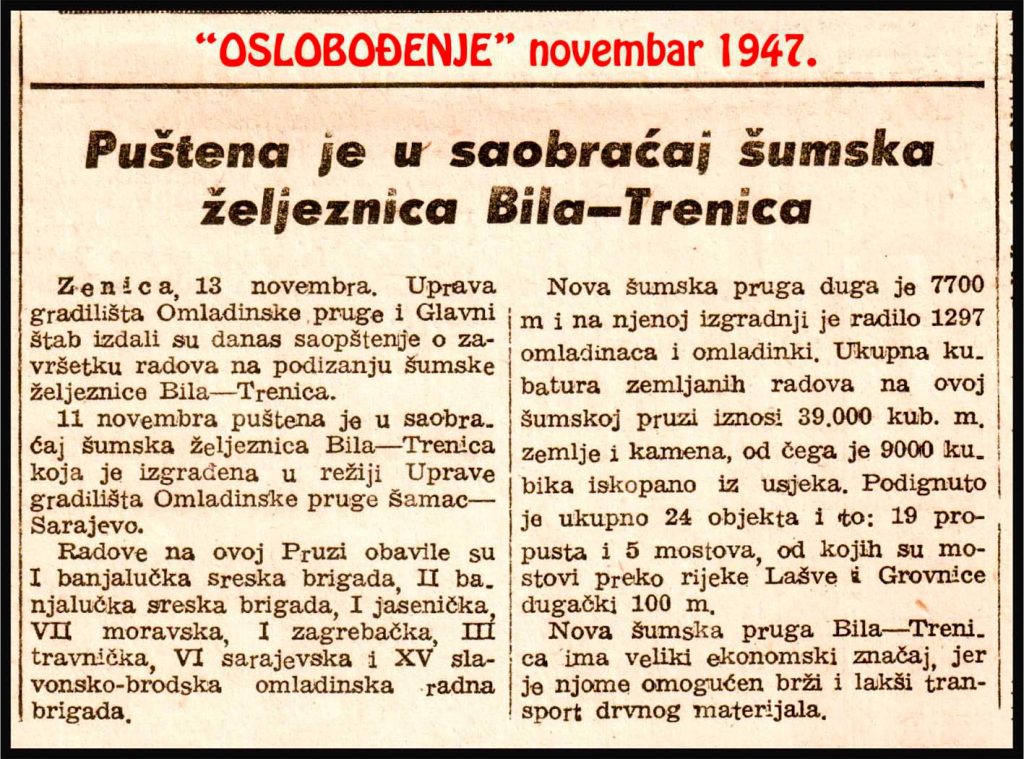
Alongside the construction of the new “Bila Nova” railway station, in the summer of 1947, work began on building the “Bila Nova – Trenica” forest railway, which is 7,700 meters long. The construction of the railway infrastructure for the newly established station called Bila Nova and the forest railway to Trenica was carried out by the First and Second Banja Luka District Brigades, as well as the First Jasenička, Seventh Moravian, First Zagreb, Third Travnik, Sixth Sarajevo, and Fifteenth Slavonsko-Brodska Youth Work Brigades, totaling 1,297 young workers. A total of 24 structures were built, including 18 culverts and 5 bridges, with the bridges over the Lašva and Grovnica rivers being 100 meters long.
On November 11, 1947, the Construction Administration of the Youth Railway and the Main Command issued a statement regarding the completion of the work on the construction of the forest railway “Nova Bila – Trenica” and handed it over for use. (Source: The newspaper “Oslobođenje,” issue 328, November 1947)
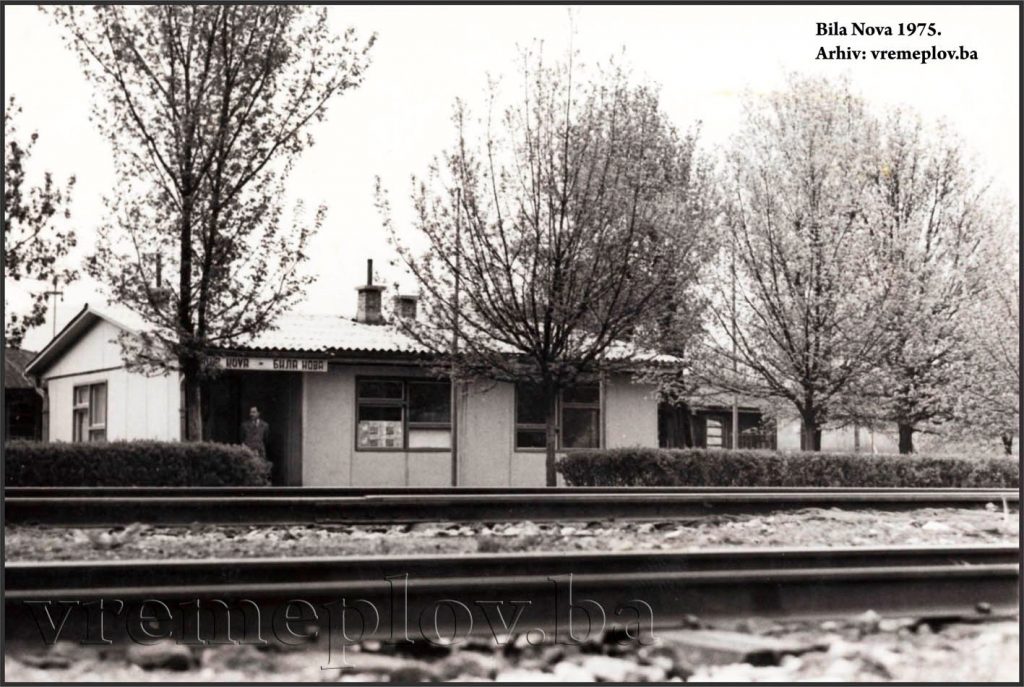
The built station building (Bila Nova) contained three rooms with approximately 40 m² of usable space. In the station, besides the passing track, two sidings were also installed. The second siding was directly connected to the forest railway towards Trenica, and also served as a connection for an industrial track to the sawmill (Bila Nova – P.D.I. “Sebešić” Travnik) with a length of 5,180 meters.
Otherwise, the railway building of the Bila Nova station and the Bila Stara station form a distance of about 750 meters. The construction of the new station brought a technical decision to relieve the capacity of the Bila Stara station, which regulated the transport of hard coal, sand for the needs of the lime kiln, and the arrival and dispatch of train compositions of cut timber from the Jasenica River basin. The Bila Nova station, in traffic terms, would regulate freight traffic for the “Trenica” forest railway, specifically for the “Bratstvo” complex, and for the transport of timber mass toward the sawmill of the “Sebešić” company.
From the Bila Nova station towards Trenica, an intersection station Bučići was built at station kilometer 4+222, with one passing track of 228 meters in length. For the needs of railway personnel (train dispatcher and switchman), a smaller building and an auxiliary structure for accommodation of fuel and materials for switch maintenance were constructed.
The end point of this forest railway is located at km 7+700 in the village of Trenica. Next to the constructed building for railway personnel, with a useful area of 42 m², three station tracks have been installed, approximately 140 meters long. From the third track, a branch has been built, which is a military-industrial siding, measuring 6,900 meters in length.
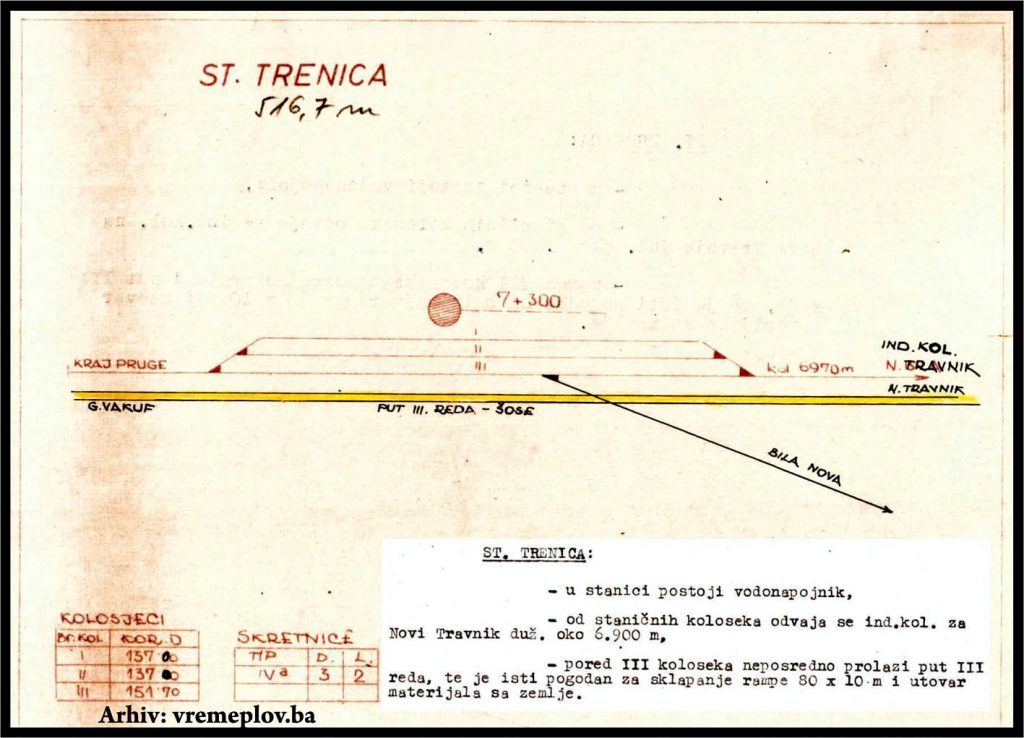
In 1949, the construction of an arms and military equipment factory, MMK “Brotherhood,” began. The building of the factory, along with accommodation units for workers, led to the development of the town of Novi Travnik.
It was populated by workers from all over the former Yugoslavia, of various nationalities and ethnicities, which is why Novi Travnik was dubbed the city of brotherhood and unity, and it became one of the most developed cities in the former Yugoslavia. By the end of the 1980s, “Brotherhood” employed over 10,000 workers, and at least 33,000 residents of Novi Travnik relied directly on that industrial complex.
After the end of the last war in these areas (1992-1995), the former industrial giant mostly left behind abandoned and plundered halls. Following the start of privatization, former directors became owners of the properties and facilities of “Brotherhood,” while a small part remained in state ownership, employing around 300 workers.
(Source: https://balkans.aljazeera.net/news/culture/2019/9/25/raspad-industrije-u-bih-bratstvo-dokumentarac-na-ajb; Updated September 27, 2019; Accessed from the source on November 3, 2022)
It is worth noting that in the area of the Municipality of Trnica, then part of the Travnik district, Jure Budimirović from Travnik, in 1899, established a water-powered sawmill at the Duboka location on the Opara river. The same owner, in 1929, also built a second steam-powered sawmill in Putićevo, near Travnik, along the Lašva-Travnik railway. He sourced the necessary timber from the state forest of Sebešić. Both sawmills operated until the outbreak of the April War in 1941.
Construction of the “Jasenica” Forest Railway – Chronology
During 1948, members of the People’s Front of the Trnovo district planned to extend the railway line by approximately 4 km, from the village of Baja to the rich forested areas of “Kozice” and “Jasenice.” These areas contain large quantities of firewood and first-class building materials, whose wood resources have so far remained unused due to their inaccessibility. This construction of a forest railway would connect all nearby villages to railway and road traffic, which until now had only been accessible via narrow paths.
Design and construction of the forest railway will serve the purpose of exploiting wood resources from the basin areas of the Bile River, Jasenica, and Zaseočki Potok over a length of 16 kilometers, built in three stages:
- Prva etapa: Odvojak – početna tačka, 0+000 do km 4+010, u toku 1952. godine,
- Druga etapa: Od prof. km 4+010 do km 10+160, tokom 1953. godine i
- Treća etapa: Od prof. km 10+160 do km 16+000 kao krajnja tačka, tokom 1953./56. godine.
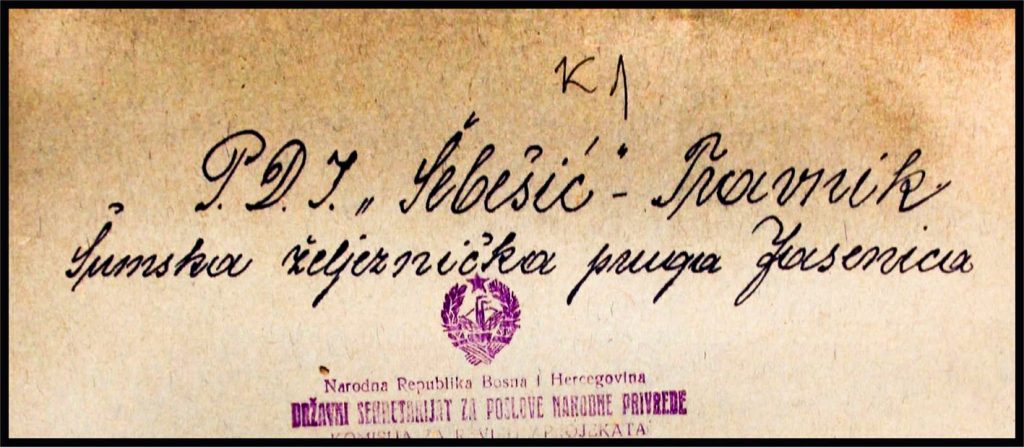
The first phase of construction was carried out in 1952. The starting point, or branch (zero km), of the forest railway was located at profile kilometer 5+500 of the already constructed mine track that runs from the Bila Stara railway station to the “Vrbica” mine, or the “Abid Lolić” mine (approximately 6.7 km in length). The first 4 km of this forest railway were partially built in 1952.
It is evident from the description of the continuity of the construction of the forest railway that the plan from 1948 was abandoned. Namely, there are several reasons, one of which is the lack of funds from the main investor, the company “Sebešić” from Travnik. Also, the reason includes the shortage of labor that was engaged in the construction of the industrial track Trenica – MMK “Bratstvo” (6,900 meters), as well as in the construction of factory buildings and the workers’ residential settlement (Novi Travnik), all during 1948–1951.
The second stage of the construction of the forest railway involves a project for an additional 6.15 km, from profile 4+010 near the village of Podovi to profile 10+160 upstream of the town of Vrbovac in the Jasenica River basin.
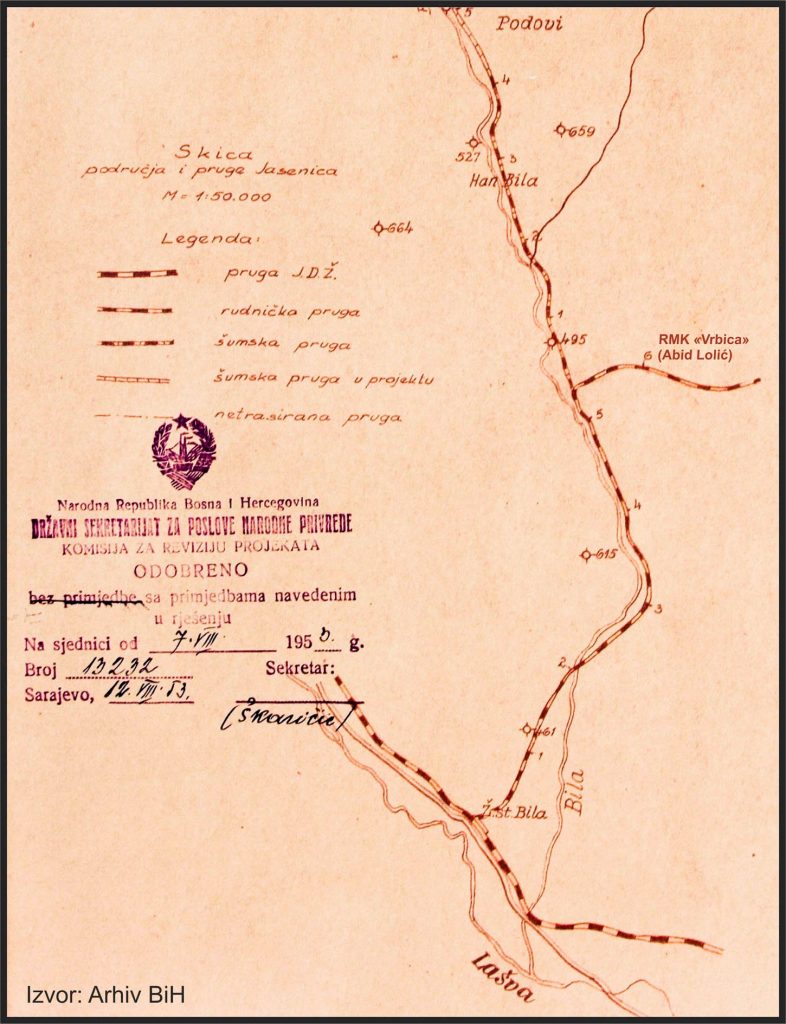
The first kilometer of the route from Podovi has a slope of the Bile River, with an incline of 14 ‰. After this section (L=1.2 km), the track gradually diverges from the river, ascending by 33 – 35 ‰, crossing the left bank of Jasenica near Mehurići at an elevation of about 30 meters above water level, and finally exits with the same slope onto fields under the village of Miletići. The length of this segment is 3.1 km. From there, up to Vrbovac, the stream Jasenica has an average slope of 28 ‰. At Vrbovac, the route crosses to the right bank of Jasenica via a 21-meter-long bridge and tunnels through a rocky massif approximately 90 meters long.
Otherwise, from a historical perspective, in the Jasenica Canyon on this strategic rocky site lie the remains of the medieval town of Vrbenac (Vrbovac town), which served as a defensive point in the northeastern area of the medieval Lašva parish. This region is closely connected with the surrounding settlements from the southern edge of the northern Bile river flow, which are situated in the valleys above the canyon. These settlements range from Gluha Bukovica in the north to Suhi Dol, as well as nearby settlements along its middle course all the way to Han Bile and Brajkovići. As witnesses of settlement, beside the old town of Vrbenac, there are medieval cemeteries and the names of settlements whose names have not changed even during the Ottoman period.
In the Defters of 1468/69, settlements such as Bukovica, Suhi Dol, Dub, Orahovo, Višnjevo, Miletići, Jezerca, Orlice, Zaselje, and Čukle are mentioned. These places at that time were has – fiefs of Isa-beg, the crown land of Bosnia, which means that during the medieval period they were estates of Bosnian bans and kings. One of the proofs is the charter of Ban Tvrtko from 1370, by which he grants Stjepan Rajković and his brother Vukac, among other possessions, the village of Čukle.
During the route excavation, builders encountered medieval cemeteries where inhabitants of the mentioned settlements were buried. For example, at the Mašeta site in Fazlići, about 1250 meters from the turn into Mehurići, there is a medieval cemetery, that is, stećci (medieval tombstones) some of which are grouped together, while on the other side of the road, there are a smaller number of solitary stećci. Likewise, near the villages of Brajkovići, Grahovčići, and Čukle, there are a significant number of larger and smaller Christian tombstones with unusual decorations, mixed among the stećci. The primary shape carved on the eastern side is a cross, while on the western side, a crescent moon is visible.
The Fazlići settlement is a mountainous and parish village near the left bank of the Jasenica River, and according to the first census after the arrival of Austro-Hungarian authorities in 1886, Fazlići belonged to the Jezerce village municipality. (Source: Lidija Fekeža-Martinović, Sarajevo. Excerpts from the text: “Research of the Medieval Cemetery at the Mašeti Site in Fazlići, Municipality of Travnik”, Yearbook/Yearbook 2016, 45:247-265)
Leaving the rocky massif, the route ascends at a gradient of 33 ‰, and after this ascent, a ‘zero-line’ is laid, mostly following the downward flow of the stream, not exceeding 30 ‰, with an exception at the segment from Skakavac downstream for 800 meters, where it reaches 35 ‰. The smallest radius of the projected route is 40 meters, with the initial part of the route requiring a minimum radius of up to 60 meters to allow for the passage of state wagons. This is because there are plans to build a main storage depot below the village of Mehurići. The track will be laid with rails weighing 12.5 kg/m, supported by untreated pine sleepers. Materials made of iron (rails, fasteners, plates, etc.) will be transported by truck from Travnik, while wooden sleepers will be delivered from Busovača, and the rail spikes will be made in Kreševo and transported to the construction site.
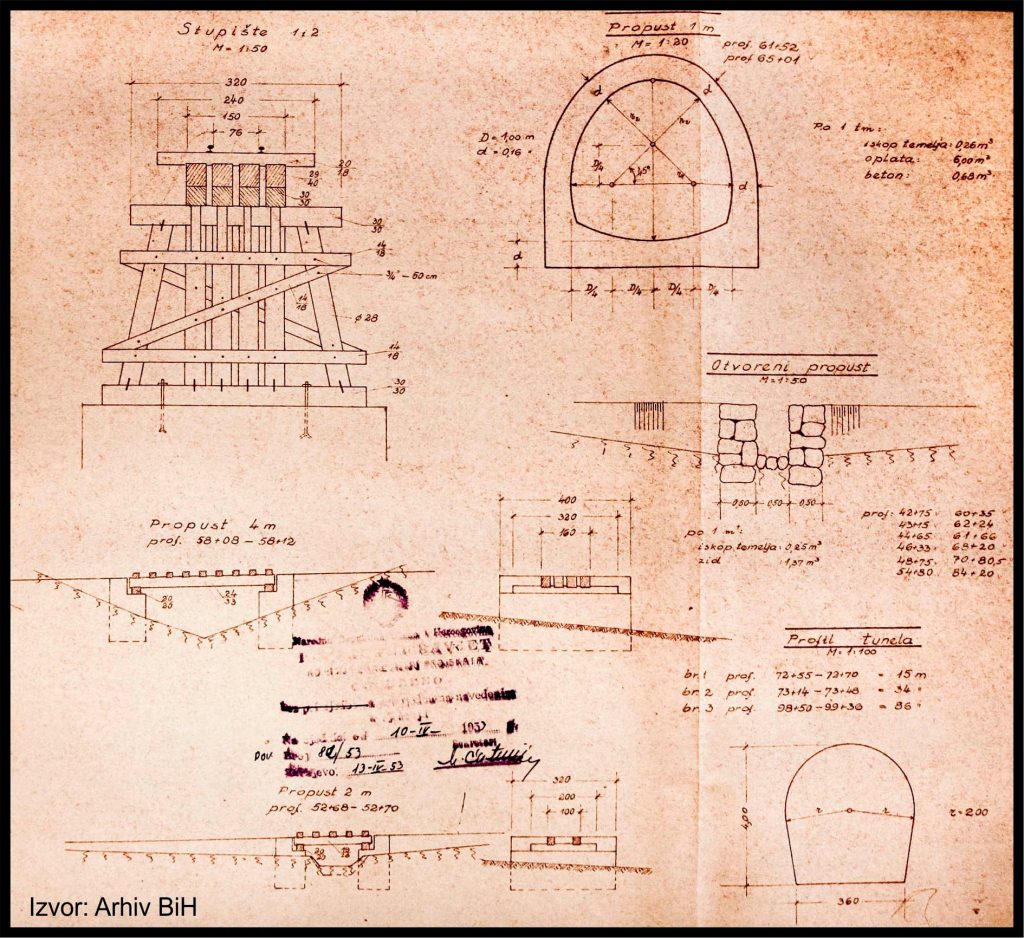
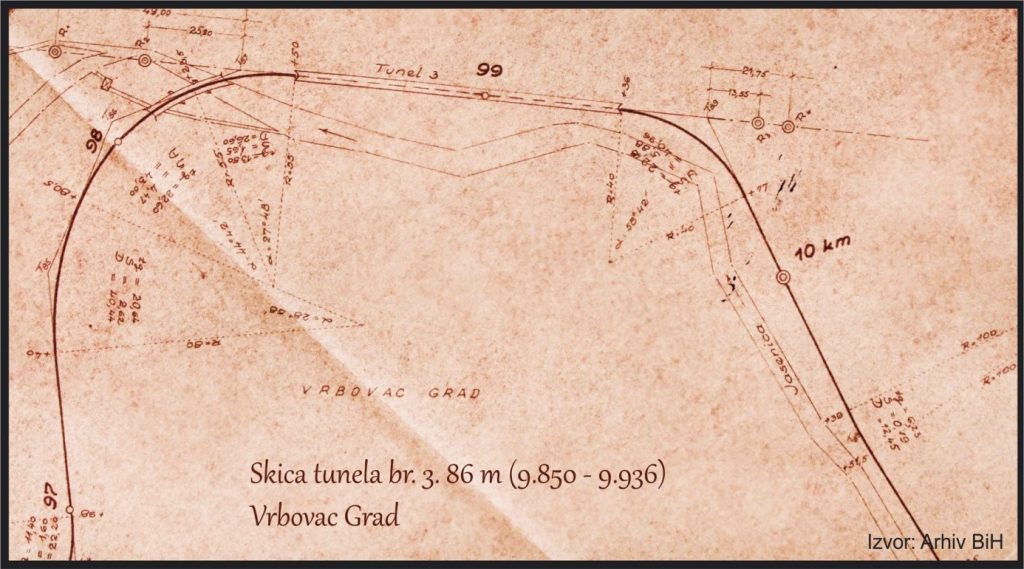
The terrain is intersected by rocky ridges (vertical limestone cliffs 20-25 meters high) requiring the construction of three tunnels (in solid rock, with ridge widths of 15-40 meters) totaling 135 meters in length, and the design of a 21-meter-long bridge over the Jasenica River. Tunnel No. 1 is located at the profile kilometer, from km 7+255 to 7+270, with a length of L=15 m; tunnel No. 2 from km 7+314 to 7+348, with a length of L=34 m; and tunnel No. 3 from km 9+850 to 9+936, with a length of L=86 m.
A special challenge for the builders was breaking through the mountain for an 86-meter-long tunnel. Specifically, the problem was overcoming the western cliff, which was composed of steep rock faces often exceeding a 45° angle. At the top of the western cliff was the fortress of Vrbenca (Vrbenac, today the town of Vrbovac), built as a square tower with a small courtyard, which is now in ruins. To tunnel through the mountain, a single mining brigade from Dalmatia was engaged. Among them were excellent skilled stonemasons who carved the tunnel arches to perfection.
Since ancient times, it has been passed down from generation to generation that there is a secret passage into the bowels of Vrbenc and that gold is hidden there, carried by the underground waters of the river Jasenica. There is a story that the friars from Travnik knew about the secret passage into the interior of the town and are seen entering into Vrbenc’s depths and taking out gold from below. Yet, to this day, no one has been able to find this secret passage. Anyway, the mountain was pierced within the allotted time, but there is no trace of the gold ore. (Source: Husref Redžić, excerpts from the book “Medieval Towns in Bosnia and Herzegovina”, Sarajevo, 2018)
The third stage of the project involves extending the route from profile km 10+160 to km 16+000, which is the final point of this forest railway. At the second kilometer of the route (12+160), it enters the exploitation area in the basin of the Jasenica River with an anticipated timber harvest of about 200,000 m³, mainly beechwood and a smaller portion of conifers.
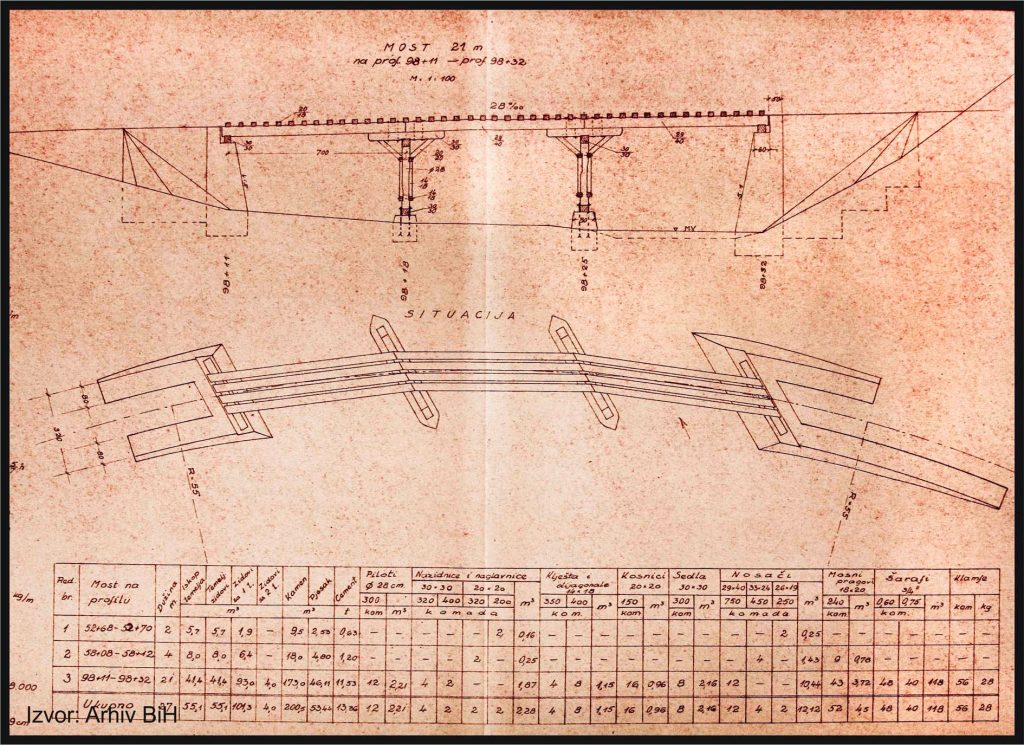
The route is laid along the right bank of the Jasenica River up to profile km 10+939, where it crosses a bridge with a length of L=14.00 meters to the left bank. Relative to the river, the elevation of the route ranges from 1.5 to 3.00 meters, satisfying the conditions for loading timber with logs on both sides. The slopes of the route are generally adjusted to the river’s slope, except for the grade of 37.92 ‰ at the end of the route, which was used to overcome the height difference of the waterfall approximately 14 meters high.
The route is laid on very difficult terrain, crisscrossed along its length with steep sides that often exceed 45°. Between profile km 10+338 and km 10+406, due to a large cut, the route was corrected by shifting it into the riverbed, with a channel excavation into the rock on the opposite bank of the river. On this section, because of numerous springs, it is planned to build 30 open culverts constructed with stone and cement mortar, as well as 6 concrete pipe culverts.
The significant slope of the terrain in cross-section necessitated the construction of retaining walls. Some of the walls were built from broken stone with dry masonry, while others with stone set in cement mortar, particularly in areas where the route crosses the riverbed. Due to the difficult accessibility of the terrain, external transportation of materials was carried out using pack horses. Since no stone crusher was available at this section, manual production of crushed stone was performed. According to research, some sources state that the last section was completed in 1954, while others mention the year 1956. (Source: Bosnia and Herzegovina Archives – unpublished fund; Design bureau of the Wood Industry of the NRBiH, Archive File No. 76/53, P.D.I. “Sebešić” Travnik – Jasenica Railway)
With the dismantling of the narrow-gauge railway Lašva – Jajce, passenger traffic ceased on June 3, 1973, and freight traffic on June 1, 1975, the needs for the exploitation of the “Jasenica” forest railway also ended. The upper track machinery of the railway was soon dismantled and, together with the freight cars and locomotives, sent on their last journey, where they would end their working life by melting in the high furnaces of the Zenica Ironworks.
The last freight train, number 79077, was dispatched from Travnik towards Lašva on July 2, 1975, departing at 11:52 AM. The train from Travnik was dispatched by the train dispatcher Soldo (???), and in Lašva, it received and dispatched a train heading towards Zenica with dispatcher Vajić (???). On the train conductor’s service, for the final journey of this train, Selimović Ređep performed the duties. (Source: Ajdin Fevzija Braco – the data was orally cited by the author from personal archival documentation).
The remnants of the lower track of the former forest railway will be connected to the old road. This extension, along with the later asphalt paving, has created a modern road connection to all surrounding towns in the direction of Bile and Travnik, or toward Kotor Varoš.
Rememberances and Memories of Akif Dervišević’s Forest Railway
There are many oral traditions and testimonies from generations born in the 1950s, which are connected to the broader homeland and the family life of farmers and workers from the Mehurići village and surrounding hamlets. The story we present encompasses the period during the construction of the forest railway in this relatively small area of the Travnik district. The records of past events are linked to the memories of Mr. Akif Dervišević, born in the village of Suhi Dol near Mehurići, where he shares his personal experiences and testimonies arising directly from the daily life of older narrators. The conversation took place in the offices of the Energopetrol gas station in Semizovac, where Mr. Akif performs the duties of the station manager.
His narration was manually recorded in the author’s notes, and we are transmitting it in its entirety.
Heroes of Sulja Đambas
“I remember a story,” says Akif, “about a certain Suljo Đambas who was working as a digger on the route at that time. In terms of physical appearance and body constitution, Suljo was tall, over two meters, broad-shouldered, and had a massive build. At that time, work was underway on the section below the village of Guča Gora. From a nearby hill called Kraban, the singing of girls could be heard rising and carried by gusts of wind all the way to Suljo and his neighboring brigadiers. Suljo, driving primitive carts with wooden wheels loaded with moist earth, paused as if nailed to the ground, listening to the voices carried from the girls’ lips.”
After an already rainy and cold day, Akif continues his story, young blood surges within Suljo’s body, and those wheelbarrows he was holding in his hands—whether out of recklessness or desire? God knows—he lifts them from the ground and swings them over his head, behind his back. While the wheelbarrows were still in the air, Suljo let out a loud scream that echoed along the route.
Since the construction supervisor was nearby and saw trouble brewing, he approached Suljo, offered him congratulations for his bravery, and said: “Suljo, you’ve met your quota for today, you’re free to go home.” Suljo slightly tipped his cap at the half-eleven mark and, with broad steps along the muddy road, headed back to his village.
Railway Accident
I was told, Akif continues his story, about a major train accident with tragic consequences that occurred near the tunnel entrance by the village of Fazlići. Witnessing this event was Lutvo Bajramović, who was on the train as the brakeman that unfortunate day. Specifically, the train, loaded with logs, was moving down the Jasenica River valley toward the warehouse in Mehurići. At one point, just before entering the tunnel, the train broke apart, and almost all the loaded wagons tumbled into the canyon of the Jasenica River. In this situation, many railway workers and brakemen jumped from the wagons to save their lives. Those who jumped to the right, along the canyon, lost their lives because the logs, carried by inertia, pressed them down as they rolled into the abyss of the Jasenica River. The more experienced railway workers who jumped to the left, along the track and towards the hill, remained alive, and among them was Lutvo Bajramović, under fortunate circumstances. I cannot remember the exact year this event took place, but he told me that they spent days retrieving the toppled wagons and logs. Due to the extremely inaccessible terrain, the wagons and logs were pulled out using steel cables with the help of horses and oxen, generously supplied by the villagers from the surrounding villages.
Breaking Through the Hill
Regarding the blasting of the hill for the tunnel beneath Vrbovac, Akif continues his story, telling me that his uncle Derviš Keško from Suhi Dol shared this with him. He himself was a volunteer participant. According to my uncle, a smaller brigade composed of experienced workers from Dalmatia worked on that tunnel. They would manually, using a pickaxe and a steel ‘stamp’ or spike, drill holes into the rock, and later with mining explosives and sticks, they would blast through the hill. Broken stone was manually loaded into carts and transported to one location, and once the tunnel was completed, the same stones were taken to places where support dry-stone walls were being built. Dalmatian masters, craftsmen of their trade, worked exclusively on building these walls, while others broke the stones into small pieces for aggregate, which would later be used for laying sleepers and rails. Most of the younger brigade leaders from Dalmatia, enchanted by the wooded mountains and endless green meadows, married here, settled, and made themselves at home.
Storehouse Code of Pašina Mill
A massive log from the Jasenice River valley was unloaded at a large yard called Lager, located along the left bank of the Bile River, just below Mehurići. This is how the place has been referenced since old times, and so the name has remained to this day, continues Akif. There, the unloaded logs were loaded into state carriages and transported to the sawmill. Opposite this Lager was a grain mill located on the right bank of the Bile River. It was owned by a certain Pasha, whose last name I do not remember. That mill has long been gone, but even today, the phrase “at Pasha’s mill” can be heard in conversations.
Otherwise, during the track laying, this Lager was used for storing wood for future railway sleepers. Namely, a village councilor would visit houses and, by voice, call the host, with the obligation that they were required to, free of charge, cut down trees for a total of ten sleepers. My mother told me this story, and everyone would readily contribute to executing the order issued by the authorities.
Felled tree, shaped to the gauge of a railway sleeper, would be sent to Lager, or to the nearby sawmill, and processed into the specified dimensions of sleepers for a narrow-gauge track.
Train ride from Mehurići to Mostar
By the way, I also want to mention this, Akif continues the story. At that time, for us residents who stayed along the forest railway, it was something special, interesting, and an invaluable blessing. Namely, the memory of the first train ride from Mehurići to Mostar was shared with me by my mother. She was a girl and a schoolchild at the time. She traveled with her father, my grandfather. His family was from Herzegovina, and his father, my great-grandfather, had long ago settled in Suhi Dol, where my grandfather was born in 1888. Anyway, my grandfather, Hajdar Spahić, was educated at the Elči Ibrahim-Pasha medresa in Travnik. After completing elementary and secondary education at the medresa, he received the title of imam. As my mother told me, in 1914, the Austro-Hungarian military command in Travnik mobilized him as part of the Second Bosniak Regiment and sent him to the front as an infantryman and military imam. Her grandfather told her that he fought for a while in Hungary on the slopes of the Carpathians, and spent most of his time in heavy battles on the Soča Front at the Slovenian-Italian border near Gorizia. He returned from that war alive and healthy, without a single injury.
And, to return to that journey to Mostar, Akif continues the story. The most important luggage they carried with them was a woven basket filled with food and water. Grandpa knew that it would be a long trip. According to my mother, whenever he traveled far and needed to spend the night, he would ask his grandmother to pack him a few white, starched shirts and put them in a special suitcase. It was the same this time. Because Grandpa, as a religious official, always cared about himself and his appearance. From Mehurići to Bile, they traveled by forest railway. They traveled in a small wagon, which was a wooden boxcar with small windows. Around it were wooden benches, and in the middle, a larger piece of luggage was stored. This wagon was used to transport workers and auxiliary materials to the work site.
As I was told, this forest railway was not part of public transportation, but the forestry administration occasionally made exceptions and transported local residents to Bile free of charge. At the Bile station, as my mother told me, they waited for the passenger train from Jajce and transferred to Lašva. In Lašva, they would switch to a passenger train with larger, more comfortable carriages, since they traveled on a wider gauge track and arrived quickly in Sarajevo. After a lengthy wait in Sarajevo, the journey continued toward Mostar on a narrow-gauge track, the same gauge as the one built from Jajce to Lašva.
Due to the large derailment on the railway, from Bradina station to Konjic, a special locomotive would be attached at the front of the train. With the help of an additional mounted rack rail, the train would slowly descend to Konjic. As her grandfather explained, the same slow pace of travel would occur on the return trip when going uphill, and that trains overcame the steep incline on Komar on the narrow-gauge track from Donji Vakuf to Travnik on the same principle.
In Konjic, the locomotive would be changed again, and the train would continue its journey through the Neretva River valley all the way to Mostar. Somewhere before arriving in Mostar, grandpa would wash himself in the carriage washroom and replace his dusty, soot-stained shirt with a clean, ironed one that his grandmother lovingly prepared for him.
Regarding the return and the experience during the drive uphill from Konjic to Bradina, her story sounded wondrous, and even today it brings a smile to my face. She explained to me that the train climbs like through some switchbacks and how it seemed to her that she had just seen the same landscape or settlement with the same mosque multiple times. Of course, as a boy, I didn’t understand anything at the time, but later, as I grew up, I realized what she was talking about.
From what I remember from her story, their journey lasted two days and one night. All of her recounting left such a deep impression on me as a young listener that I still happily retell it today, and it remains forever in my memories.
We sincerely thank Mr. Akif Dervišević for this valuable storytelling.
In an effort to make the text as authentic as possible, without major editorial interventions, readers should accept the fact that the storytelling content may contain spelling and grammatical errors and may treat them as a technical issue.
This modest research paper, which we have presented in this article, is concluded with sincere gratitude to the employees of the BiH Archive in Sarajevo, without whose assistance in recommending the use of available library materials and permission to present the aforementioned sketches and plans, this would not have been possible.
Note:
Downloading a part (up to one-third) or the entire text is possible in accordance with Article 14 of the Code of Practice for the Press and Online Media of Bosnia and Herzegovina.
If another media outlet wishes to use part or the full authorship of this text, it may do so exclusively with the written permission of the portal vremeplov.ba.
After obtaining permission, it is required to cite the source as the portal vremeplov.ba and, at least in one place, publish the link where our text is published.